

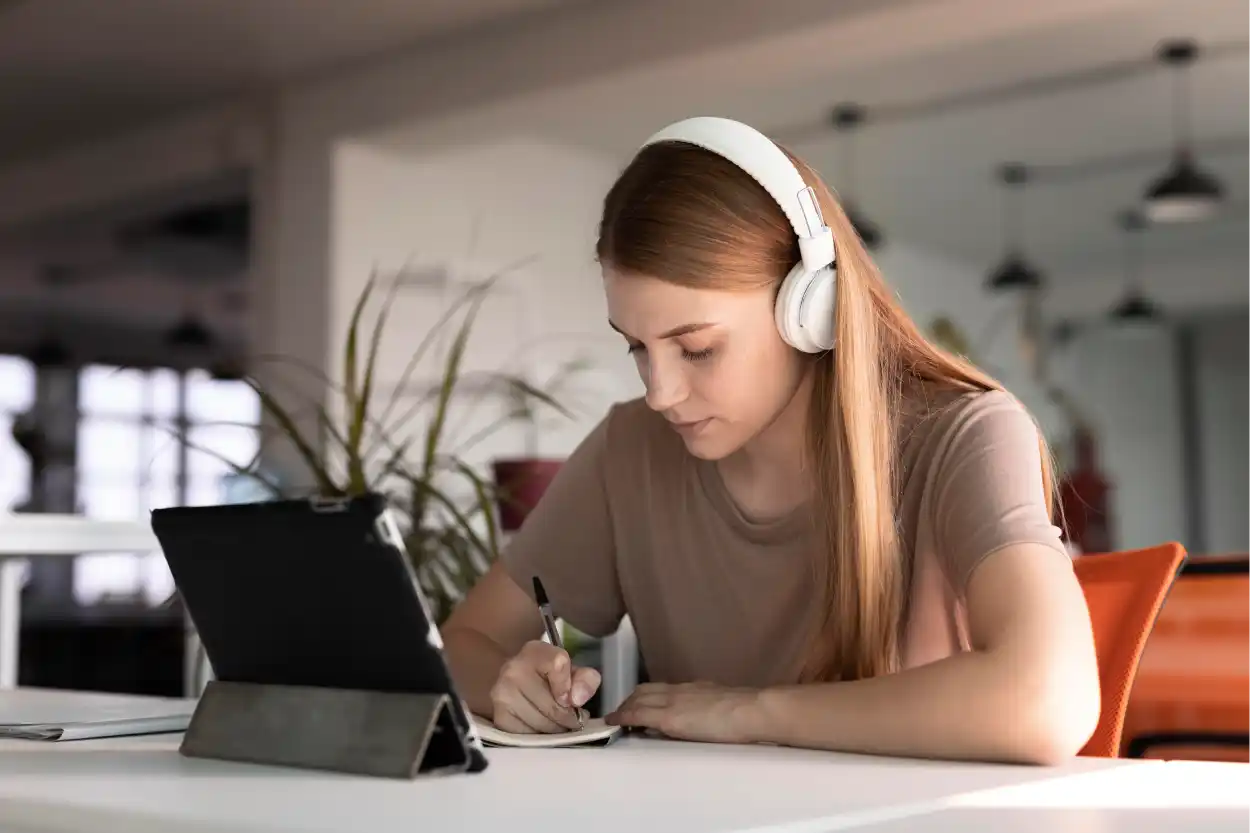
The educational paradigm has shifted dramatically over the last decade. For generations, the only recognized path to acquiring knowledge was synchronous instruction, where a group of students sat in a physical classroom while an instructor delivered a lecture at a fixed tempo. In this traditional setup, the entire group moved forward at the exact same speed, regardless of individual comprehension levels, personal obligations, or varied learning styles.
With the advent of robust digital infrastructure, self-paced learning courses have emerged as a massive force in education. From high schoolers and university undergraduates to working corporate professionals, millions of learners are actively choosing educational programs that allow them to control the clock. This overwhelming preference is not a fleeting trend. Students genuinely love self-paced learning because it respects their individuality, eliminates unnecessary academic anxiety, and aligns perfectly with the demands of modern life.
Complete Autonomy Over Time and Scheduling
The most immediate and obvious reason students gravitate toward self-paced courses is the unparalleled scheduling freedom they provide. In a conventional academic setting, the institution dictates when learning happens. If a class is scheduled for Tuesday morning at eight o’clock, the student must conform, irrespective of whether that hour represents their peak cognitive alertness or clashes with personal responsibilities.
Self-paced models invert this power dynamic. The student determines precisely when, where, and for how long they will study. This autonomy is particularly life-changing for specific demographics:
-
Working Professionals: Individuals who want to upgrade their skills to secure a promotion can study late at night or during lunch breaks without sacrificing their full-time incomes.
-
Parents and Caregivers: Parents can build their study routines around their children’s school hours or nap times, making higher education accessible without requiring expensive childcare.
-
Geographically Isolated Learners: Students living in rural areas or different time zones can access world-class curricula without the financial and emotional burden of relocation.
By removing the requirement of physical presence at a designated time, self-paced learning transforms education from an intrusive structural obligation into a seamless component of a student’s daily life.
The Elimination of Academic Peer Pressure and Anxiety
Traditional classrooms are inherently competitive environments, which can introduce significant psychological stress. When an instructor poses a complex question or moves rapidly through a difficult chapter, a student who requires more time to process the information often experiences intense anxiety. They may feel embarrassed to raise their hand, fear looking inadequate in front of their peers, or simply panic as the lecture marches forward without them.
Self-paced courses operate within a private, low-stakes environment. There is no audience watching your progress. If a concept seems confusing, a student can pause the instructional video, rewind it three times, search for supplementary reading material, and process the concept thoroughly before moving to the next module.
Conversely, if a student already possesses baseline knowledge of a subject, they do not have to sit through agonizing hours of repetitive explanations just because the rest of the class needs them. They can skip ahead immediately. This tailored pacing reduces the cognitive load associated with performance anxiety, allowing students to focus entirely on genuine comprehension rather than superficial survival.
Deeper Cognitive Mastery Through True Competency-Based Progression
A glaring flaw of the traditional time-bound academic semester is that it rewards completion over absolute mastery. In a standard fifteen-week course, the class spends exactly two weeks on a foundational topic, takes a quiz, and then moves to the next chapter. If a student receives a seventy percent on that quiz, it means they missed thirty percent of the fundamental information. Yet, the system forces them forward into advanced concepts that build directly on the material they failed to fully comprehend.
Self-paced learning is built entirely on a competency-based model. In this framework, a student cannot unlock module three until they have demonstrated complete mastery of module two.
This structural difference changes the psychological approach to studying:
-
Shifting the Focus to Mastery: Failure ceases to be a permanent black mark on a transcript and becomes a normal, expected part of the learning cycle.
-
Encouraging Deep Review: If a student fails a modular assessment, they simply return to the study materials, re-evaluate their weak areas, and retake the test when they are genuinely ready.
-
Building a Solid Foundation: Because students cannot bypass foundational concepts without proving competence, the knowledge they acquire is durable and structurally sound, preventing the academic collapse that often happens in advanced traditional courses.
Catering to Diverse Learning Styles and Neurologies
Human brains are not uniform. Some individuals are highly visual learners who require detailed diagrams and written transcripts, while others are auditory learners who absorb information best by listening to spoken words at an accelerated pace. Furthermore, neurodivergent students, such as those with Attention Deficit Hyperactivity Disorder or autism, often find the rigid sensory and structural environment of a packed lecture hall incredibly counterproductive.
Self-paced courses offer a customizable sensory and cognitive environment. Many modern online learning platforms provide a rich variety of media options, including video lectures, interactive text scripts, downloadable audio files, and practical coding sandboxes.
Students have total control over their learning environment. They can put on noise-canceling headphones, speed up video playback to one and a half times the normal rate to maintain focus, or break down a massive three-hour lecture into bite-sized, ten-minute micro-learning sessions spread across an entire afternoon. This level of personalization allows individuals to align their studies with how their brain naturally processes information, maximizing retention and reducing operational fatigue.
Fostering the Critical Soft Skill of Self-Discipline
While students initially love self-paced learning for its convenience, they ultimately value it for how it transforms their personal character. Succeeding in an environment without physical attendance sheets, mandatory lecture hours, or professors constantly reminding you of deadlines requires immense intrinsic motivation, time management, and accountability.
When a student successfully navigates and completes a comprehensive self-paced course, they have proven to themselves that they possess executive function and self-discipline. They learn how to set personal milestones, manage procrastination, create dedicated workspaces, and maintain long-term focus without external supervision. These exact self-management traits are precisely what modern corporate employers prioritize. A self-paced graduate enters the workforce already equipped with the independent working habits required to thrive in modern, remote-first and hybrid corporate environments.
FAQs
How do self-paced courses ensure that students do not procrastinate indefinitely and never finish?
Reputable self-paced courses use behavioral science mechanisms to keep students on track. These include automated progress trackers, personalized email reminders, calendar integration tools that help students schedule study blocks, and recommended completion timelines that provide a gentle psychological benchmark without enforcing rigid penalties.
Can students in a self-paced learning environment still interact with instructors or ask questions when they get stuck?
Yes. Modern self-paced platforms maintain robust academic support infrastructures. Students can submit specific questions through dedicated discussion boards, access text-based help desks, or schedule virtual office hours with subject matter experts and teaching assistants who provide targeted feedback within a designated window.
Are self-paced courses viewed as less prestigious or credible by corporate employers and traditional universities?
The professional landscape has evolved significantly. Employers today prioritize the institutional accreditation of the provider and the verified skills of the applicant over the delivery method of the coursework. Many elite global universities and fortune five hundred companies now actively produce their own self-paced certificate programs, cementing the model’s credibility.
How do assessments and grading work if everyone in the course is taking exams at completely different times?
Assessments are managed through algorithmic grading systems and randomized question banks, ensuring that no two students receive the identical set of exam questions. For advanced or creative subjects that require human grading, assignments are submitted to a queue where remote instructors or peer-review panels evaluate the work based on standardized rubrics.
Is it possible to build a professional network or socialize with peers in a course where everyone learns independently?
Yes. While you do not sit next to classmates in a physical room, self-paced courses foster global networks through asynchronous community hubs, active student forums, dedicated chat channels, and organized virtual study groups where learners at similar stages of the curriculum can collaborate on projects and share insights.
What should a student do if they realize they lack the self-discipline required for a purely self-paced course?
Students can utilize a hybrid approach by introducing external accountability structures. This can include finding a study partner to serve as an accountability buddy, joining online communities focused on co-working, or utilizing website blockers to eliminate digital distractions during designated study hours until self-discipline becomes a habitual routine.
Are there specific academic subjects that do not translate well to a self-paced learning model?
Subjects that require real-time interpersonal performance, such as advanced public speaking, theatrical acting, conversational language immersion, or complex surgical clinicals, generally require a synchronous component. However, the theoretical baselines of even these complex subjects are increasingly taught through self-paced modules before students transition to hands-on, live training environments.