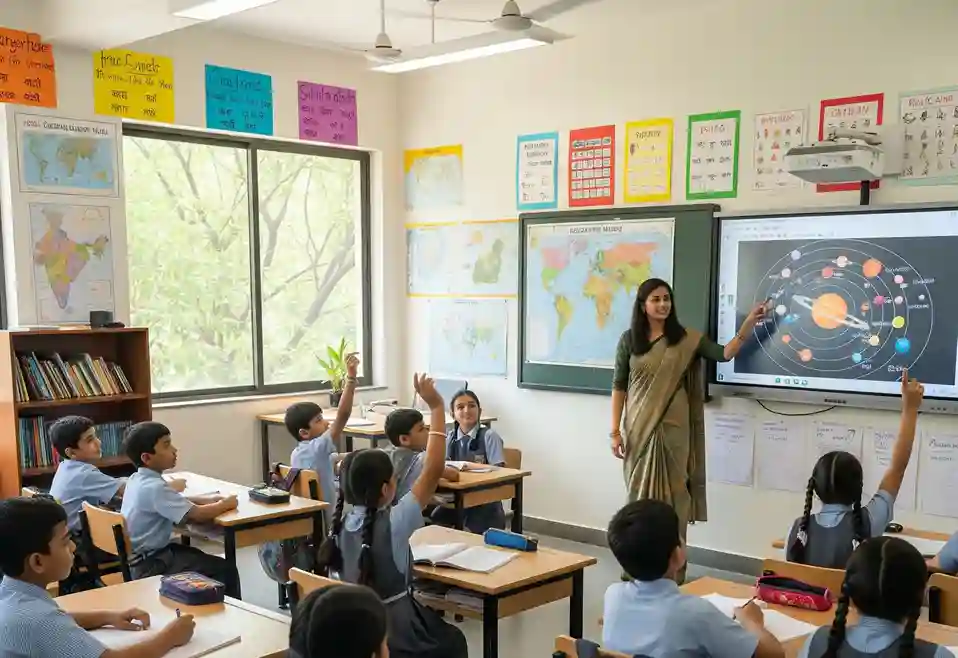

A child’s educational journey is most successful when schools and parents work together toward common goals. In International Baccalaureate (IB) education, this partnership plays an even more significant role because the curriculum emphasizes holistic development, critical thinking, global awareness, and
Author Archives: Baird Carl
The foundational architecture of institutional education has remained largely static for centuries. A single teacher stands at the front of a physical room, tasking themselves with instructing a group of twenty to thirty students simultaneously. This assembly-line model operates on
The modern professional arena is defined by a state of permanent evolution. For past generations, completing a specialized degree or trade certification marked the end of formal learning and the beginning of a stable, predictable career. An individual could reasonably
The modern family schedule has never been more complex. Balancing demanding professional careers, household management, and children’s extracurricular activities creates a continuous logistical puzzle for parents. Amidst these daily pressures, ensuring that children receive adequate academic support has become a
The job interview is often perceived as a high-stakes interrogation, a psychological barrier where candidates feel they must perform perfectly under intense scrutiny. This perspective naturally triggers a physiological stress response, resulting in dry mouth, racing thoughts, and a sudden
In an era dominated by rapid technological disruption, fluctuating economic landscapes, and a growing skepticism toward traditional institutions, the true value of education is frequently questioned. Critics point to rising tuition costs, outdated curricula, and the immediate accessibility of information
The transition from high school to higher education represents far more than a step up in academic rigor. For most young adults, entering college is the first true departure from the structured, highly supervised environment of childhood and adolescence. Up
The educational paradigm has shifted dramatically over the last decade. For generations, the only recognized path to acquiring knowledge was synchronous instruction, where a group of students sat in a physical classroom while an instructor delivered a lecture at a
The traditional trajectory of a professional career used to follow a predictable, linear path. An individual would complete their formal education, secure an entry-level position, master a specific set of operational tasks, and steadily climb a corporate ladder over several
The landscape of higher education is undergoing a profound structural transformation. For generations, the traditional academic model required absolute conformity: fixed lecture schedules, physical campus residency, and rigid degree pathways. However, today’s learners are rejecting this singular mold. As economic